

乐播传媒 Asia Pacific

“Diverse, dynamic and dedicated to doing things very differently. My region is extraordinary. Being Regional Director of Asia Pacific is a totally engrossing, 24/7 experience. Covering a huge geographical area with so many cultural, social and political points of difference... I am delighted to say no day – and no meeting – is ever the same. ”
—Waikin Wong
The Asia Pacific region is showing a tremendous desire to get back to its very best after a difficult few years. The ambition is high and the appetite strong. As a destination, our cities and communities are focussed on bringing the businesses of the world to our doors. Our professionalism, enthusiasm and commitment to Sustainability, Legacy and DEI makes Asia Pacific the compelling choice for international association events.
乐播传媒 Chapter Chairpersons and Deputy Chairs
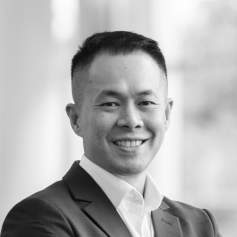
Jason Tan Chin Foo
Chapter Chair
Chief Executive Officer, Business Events Sarawak (BESarawak)

Andrew Jiang
Deputy Chair
Director & Partner, Zhuhai Macau Expo Co., Ltd.
-
Jason Tan Chin Foo, Chapter Chair, 乐播传媒 APAC
Chief Executive Officer, Business Events Sarawak (BESarawak)
-
As 乐播传媒 APAC Chapter Chair, what do you see as the biggest opportunity for the Asia Pacific region to strengthen its position in the global association meetings landscape over the next five years?
Asia Pacific is home to one of the world's fastest-growing economies, leading research institutions and emerging innovation hubs. This gives our region a distinct advantage because the future of association meetings will increasingly be driven by knowledge, innovation and collaboration, rather than geography alone.
Being the second-largest meetings region in the world reflects the region's growing influence in the global association meetings landscape. This momentum presents an important opportunity to position APAC as a region that helps solve global challenges.
Whether in healthcare, sustainability, digital transformation, agriculture, renewable energy or advanced manufacturing, our region possesses deep expertise that can make meaningful contributions to international dialogue, research and innovation.
To realise this potential, we must embrace the collective strengths of our diverse destinations and work together to elevate APAC's influence on the global stage. We need stronger regional collaboration, greater investment in talent, and deeper partnerships with international and regional associations. By working together and demonstrating that our meetings generate lasting economic, scientific and societal outcomes, we can strengthen APAC's competitiveness and establish the region as a global leader in purpose-driven association meetings.
Ultimately, our success should not be measured by the number of delegates we attract, but by the knowledge we exchange, the partnerships we build, and the lasting impact we create long after each meeting has concluded.
-
BESarawak has been recognised for its innovative approach to business events. What lessons from Sarawak's journey do you believe other emerging destinations in APAC can adopt to accelerate their growth and impact?
The first lesson is that every destination has a unique story to tell. You do not need to be the biggest city or have the largest convention centre to succeed on the international stage. What matters most is knowing your "why", having a clear sense of purpose, and delivering authentic value that sets your destination apart.
Sarawak shifted its conversation from tourism to transformation. Instead of asking, "How many delegates can we bring?" we asked, "How can business events contribute to our destination’s long-term development?" That change in mindset influenced everything from our bidding strategy to our partnerships and the way we measure success.
More importantly, we align our business events strategy with the Sarawak Government’s broader development policies and master plans. In Sarawak, this means aligning with the Post COVID-19 Development Strategy (PCDS) 2030. This ensures that the events we pursue are not standalone activities, but strategic platforms that can support the Government’s priorities,
The second lesson is to embrace innovation early. We invested in measuring impact, developing legacy frameworks and using data to demonstrate the outcomes of business events. When you can prove your value with evidence, you earn greater confidence from governments, associations and industry partners.
Finally, no destination succeeds alone. Collaboration across government, academia, industry, media, and communities has been fundamental to Sarawak's progress. Innovation grows much faster when everyone shares ownership of the vision.
-
The meetings industry is evolving rapidly with changing attendee expectations, technology, and sustainability demands. How should 乐播传媒 members in APAC adapt to remain competitive and relevant?
Our industry is entering an era where delegates expect much more than a well-organised event. They want meaningful experiences, purposeful networking, measurable outcomes and confidence that the event contributes positively to society. That means our members must rethink what success looks like.
Digital technology and artificial intelligence should enhance decision-making, improve delegate experiences and provide stronger insights into event outcomes. Sustainability must move beyond good intentions and become embedded in operations through measurable actions. At the same time, legacy should become part of every event's planning process rather than something considered afterwards.
Equally important is investing in people. Technology will continue to evolve, but our industry's greatest strength will always be its ability to build relationships, facilitate collaboration and create trust. Developing future leaders and strengthening professional capabilities across APAC will remain essential. The destinations that succeed will be those that combine innovation with authenticity and purpose.
Collaboration has become increasingly important across destinations, associations, and industry partners. What role do you see 乐播传媒 APAC playing in fostering stronger regional partnerships and knowledge exchange?
乐播传媒 APAC has an important responsibility to be more than a membership organisation. It should be a platform where ideas, experiences and opportunities are shared openly across the region.
Every destination has strengths. Some excel in bidding, others in sustainability, association engagement, legacy development or digital transformation. Rather than working in isolation, we should create more opportunities for peer learning and practical collaboration.
Another important role for 乐播传媒 APAC is to continue advocating for the importance and value of the business events industry. Across the region, we need stronger recognition that business events are not simply about tourism or delegate expenditure. They can be powerful platforms for economic development, knowledge exchange, innovation, investment and positive social impact. 乐播传媒 APAC can help strengthen this narrative by providing a collective regional voice and equipping members with the evidence and knowledge needed to engage governments and other key stakeholders.
I also believe 乐播传媒 APAC can strengthen connections between established and emerging destinations. By sharing knowledge, mentoring future leaders and encouraging collaborative initiatives, we can collectively elevate the region's capabilities and strengthen Asia Pacific's position as a global leader in association meetings. When APAC grows together, every destination becomes stronger, and the region becomes more influential globally.
-
Looking ahead to 乐播传媒's future in the region, what is your vision for the APAC Chapter, and what legacy would you like to leave as Chapter Chair?
My vision is for 乐播传媒 APAC to become the region's leading platform for collaboration, knowledge exchange and innovation, where every member, regardless of destination size or maturity, has the opportunity to learn, contribute and succeed.
APAC is entering an exciting new chapter. As one of the world's fastest-growing economic regions, home to leading research institutions and a rapidly expanding meetings industry, we have a superb opportunity to create meaningful economic, social and intellectual impact through business events.
As Chapter Chair, I want to foster a culture where collaboration becomes our greatest strength. That means strengthening connections across borders, encouraging the open exchange of knowledge, elevating professional standards, and supporting destinations at every stage of their development. When one destination succeeds, the entire region benefits.
The legacy I hope to leave is a stronger, more connected and future-ready APAC Chapter that is recognised as a confident leader in driving global conversations, innovation and collaboration. I want our members to see themselves as co-creators of the Chapter's future.
Success, to me, is a community where ideas, mentorship and innovation flow continuously across borders, where collaboration is instinctive, and where members proudly step forward to contribute because they know their voices, experiences and expertise have the power to shape our industry.
6. Throughout your leadership journey, what has been the most valuable lesson you've learned about building resilience and driving transformation in the business events industry?
The most valuable lesson I have learned is that resilience is not built by one organisation alone - it comes from strengthening the entire ecosystem around us.
In the business events industry, change can happen very quickly. We have experienced global disruptions, shifting market expectations, new technologies and changing government priorities. As leaders, we need to remain alert to what is happening around us, understand the direction our government and destination are taking, and be prepared to adapt. Transformation cannot happen if we continue doing things simply because they have worked in the past.
For me, this means constantly looking at how we can innovate and diversify — whether in the markets we pursue, the sectors we engage with, the partnerships we build or the value that business events can create for the destination. The stronger and more diversified the ecosystem, the better positioned we are to respond to change and identify new opportunities.
I have also learned the importance of having a growth mindset. We cannot be afraid to experiment, learn, adjust and sometimes challenge our own way of thinking. Resilience is not just about recovering from disruption; it is about learning from it and becoming stronger and more relevant because of it.
But perhaps one of the most important lessons for me has been that transformation ultimately depends on people. As leaders, our responsibility is not only to deliver results today, but also to groom and empower our team members to become the leaders of tomorrow. We need to give them opportunities, expose them to new ideas, encourage them to think differently and, importantly, give them the confidence and space to lead.
So, when I think about resilience, I see it as a combination of a strong ecosystem, continuous innovation and diversification, awareness of the changing environment, alignment with government direction, a growth mindset, and investment in people.
We cannot always predict the next disruption, but we can build an ecosystem and a team that are ready to respond, adapt and continue moving forward.
-
-
Andrew Jiang, Deputy Chair
Vice President & Managing Partner, Macau Expo Group Limited
-
As 乐播传媒 APAC Deputy Chair, what emerging trends do you believe will have the greatest impact on the future growth of association meetings in Asia Pacific?
From my perspective, the most transformative trend shaping the future of association meetings in APAC is the strategic adoption of the hub-and-spoke (satellite) conference model. We are increasingly witnessing prestigious global congresses host concurrent satellite events across continents. Notable examples include IJCAI 2025 (Canada & China), ICASSP 2025 (India & China), and NeurIPS 2026 (Australia, US, & France). Rather than diluting engagement, this decentralized framework presents a massive growth opportunity for the Asia-Pacific region. By significantly lowering travel and financial barriers for APAC delegates, it enables international associations to deeply expand their regional footprint and foster global-local knowledge exchange.
-
Having worked closely with destinations in the Greater Bay Area, how do you see regional collaboration shaping the competitiveness of APAC as a global meetings destination?
Regional collaboration is driving a fundamental paradigm shift from destination competition to collective value creation. The Guangdong-Hong Kong-Macao Greater Bay Area (GBA) serves as a prime blueprint. Powered by world-class infrastructure like the Hong Kong-Zhuhai-Macao Bridge and an extensive high-speed rail network, international delegates can seamlessly transit from Hong Kong International Airport to Macao, Shenzhen, or Guangzhou within an hour, making multi-destination itineraries highly efficient. Furthermore, the GBA uniquely synergizes Hong Kong’s global cosmopolitan edge, Macao’s UNESCO World Heritage and East-meets-West legacy, and the rich Lingnan culture of mainland cities. This unparalleled cultural density within proximity allows us to curate multi-faceted, high-value experiences that no single destination could offer alone.
-
Innovation and technology are transforming the events industry. Which technologies do you think will create the most meaningful value for associations and delegates over the next few years?
The most meaningful value comes from technologies that foster long-term community building and robust impact tracking. We are moving far beyond simple attendance metrics. Today, advanced analytics tools allow us to measure real-time attendee engagement, knowledge dissemination, and post-event collaboration. This shift provides associations with concrete, data-driven evidence to demonstrate their event’s economic, scientific, and societal ROI (Return on Investment) to stakeholders, host cities, and sponsors, turning data into a powerful tool for validation and strategic growth.
-
Many younger professionals are entering the business events sector. What advice would you give to the next generation of industry leaders looking to build successful careers within 乐播传媒's global community?
My core advice to the next generation is to deeply immerse themselves in the concept of event legacy. True leadership in this sector requires learning how to measure and articulate the non-tourism value of meetings—such as knowledge transfer, trade cultivation, and long-term social impact. Modern destinations and international associations are actively looking for strategic partners who look beyond the immediate event dates and understand how to co-create a lasting legacy. Embracing this mindset will make young professionals indispensable in 乐播传媒's global community.
-
Looking ahead, what are your priorities for supporting 乐播传媒 members across APAC, and how can the Chapter help destinations and suppliers navigate an increasingly complex business environment?
My primary priority is to foster a highly collaborative, resilient, and future-ready APAC business events community. The 乐播传媒 APAC Chapter will actively facilitate strategic alliances between emerging and established destinations. A prime regional example is the Macau-Hengqin 'cross-border' collaboration, which creates shared value, optimizes resource integration, and builds a larger, unified platform to win global bids. By championing such regional synergies, we can help destinations and suppliers transform market complexities into collaborative competitive advantages.
6. Your career spans destination development, event management, and international collaboration. What leadership principles have guided your success, and how have they influenced your approach within 乐播传媒?
The defining principle that has guided my career is prioritizing ecosystem thinking over siloed execution. Success in the modern business events industry requires looking beyond individual operations and viewing the destination as a holistic ecosystem. This means seamlessly interconnecting local governments, academic hubs, industry clusters, venues, and suppliers into a unified value chain. Within 乐播传媒, I champion this exact mindset, ensuring our Chapter advocates for the collective, interconnected strength of APAC destinations rather than isolated, fragmented efforts.
-
